Modern buildings generate large volumes of operational data from HVAC systems, occupancy sensors, lighting networks and energy monitoring platforms. In many facilities this information remains fragmented across multiple systems making it difficult for engineers and facility managers to obtain a unified understanding of building performance. As a result inefficiencies in energy consumption, equipment degradation and system interactions often go unnoticed until they affect operational reliability or increase maintenance costs.
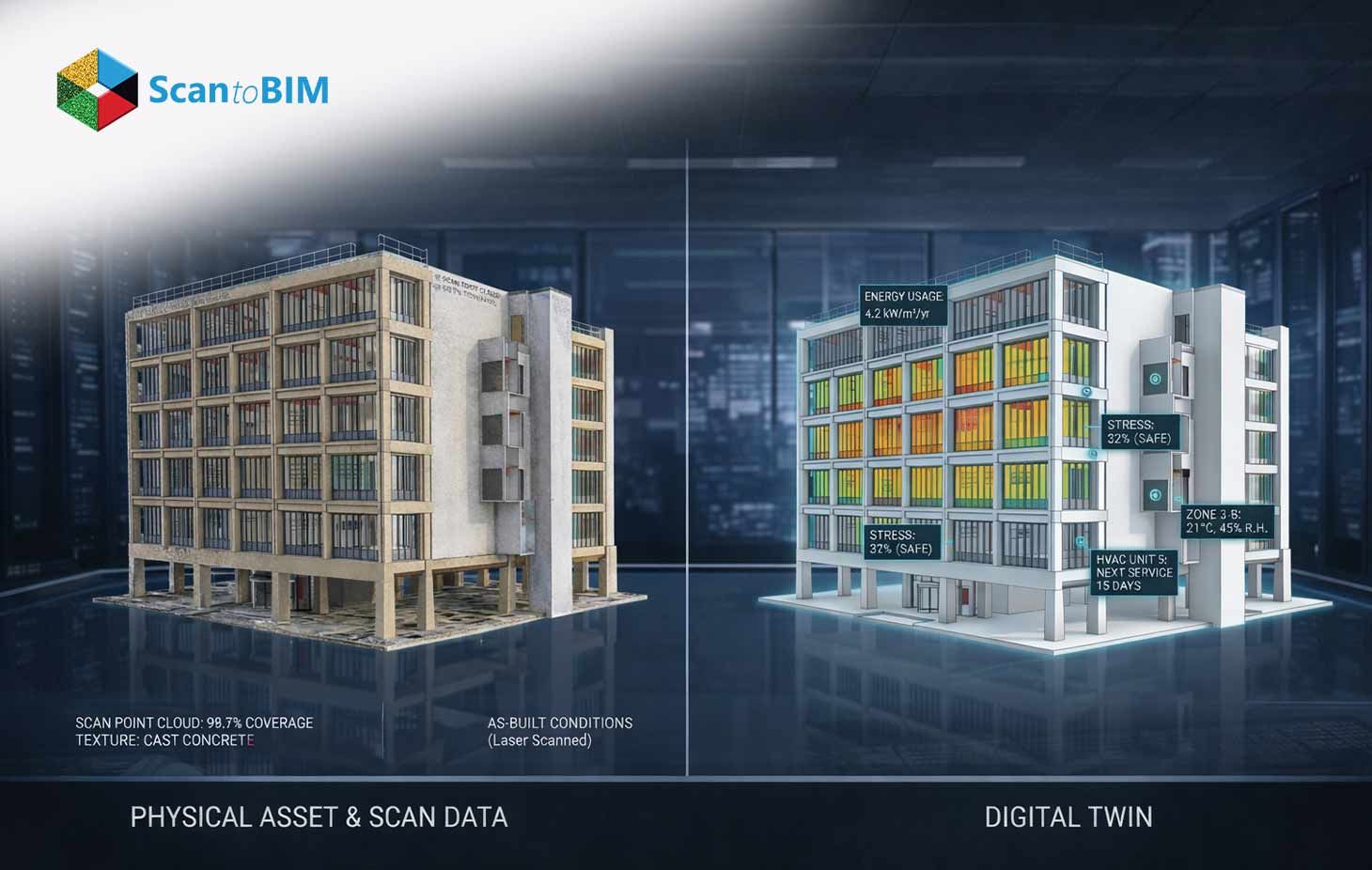
Digital twin technology addresses this challenge by creating a dynamic virtual replica of a physical area or infrastructure asset that reflects real world conditions through continuous data integration. The rapid industry adoption reflects this shift; the building digital twin market was valued at $2.07 billion in 2024 and is projected to reach $26.23 billion by 2033, growing at a CAGR of 32.6%. The digital environment integrates three-dimensional building geometry, operational parameters, and sensor generated information within a connected ecosystem. Engineers and facility managers analyze this synchronized representation to understand infrastructure behavior, operational performance, and system interaction throughout the entire building lifecycle.
Smart buildings integrate IoT sensors, building management systems and analytics platforms that transmit operational information into the digital environment. The connected model processes incoming data streams and updates system status with live operational conditions. Engineers evaluate HVAC performance, occupancy patterns, equipment health, and energy consumption across interconnected building systems through this synchronized digital interface.
This intelligent ecosystem supports the concept of digital twin for smart buildings. Engineers simulate energy performance, analyze structural health indicators, and evaluate occupancy driven operational patterns through this continuously updated digital environment. Facility teams apply predictive intelligence to improve building operations, optimize resource usage, and guide lifecycle management decisions through data analysis.
What Is Scan to BIM and How It Supports Digital Twins
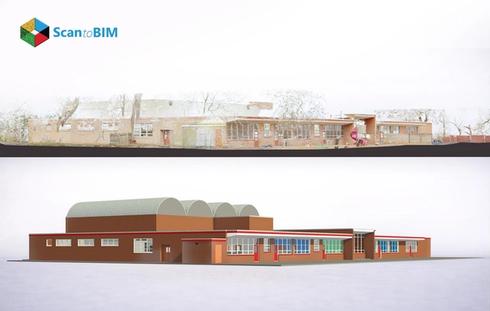
Scan to BIM converts captured spatial information from physical buildings into structured Building Information Modeling datasets. Engineers collect spatial geometry using laser scanners, LiDAR devices, and photogrammetry tools that record mesh data of coordinates. These coordinates form point cloud datasets representing building geometry and spatial relationships.
Engineers import processed point cloud datasets into BIM platforms such as Autodesk Revit, Navisworks and Bentley OpenBuildings. Modeling specialists interpret geometric references and construct parametric building components including walls, floors, structural systems, ducts, and piping networks. The resulting BIM environment represents accurate as-built building conditions that reflect the real facility configuration.
The process known as Architectural Scan to BIM creates a geometric framework that supports digital twin systems. Engineers convert point cloud geometry into structured elements and attach metadata including asset identifiers, system classifications, and material specifications in compliance with IFC andCOBie data standards . This structured dataset supports integration with IoT sensors, building automation platforms and facility analytics systems.
The 3D model provides spatial context that supports digital twin environments. Engineers analyze infrastructure configuration, building system interactions, and asset conditions through this digital representation. The integrated model enables visualization, operational analysis, and lifecycle management within advanced smart building ecosystems.
Role of 3D Laser Scanning in Digital Twin Creation
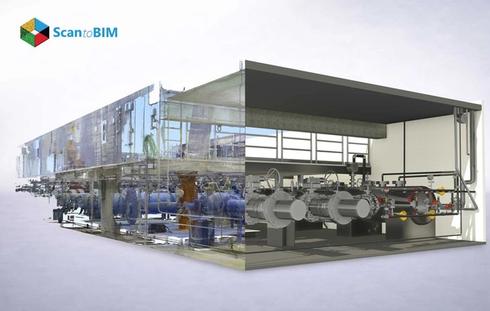
3D laser scanning captures accurate scan information from building environments through LiDAR measurement systems. Laser scanners emit rapid light pulses that measure distances between the device and surrounding surfaces. Each returned signal generates a coordinate that contributes to a dense point cloud dataset representing building geometry, infrastructure layout, and spatial relationships across architectural and mechanical systems.
The process known as laser scanning for digital twins forms the primary spatial data acquisition method for digital twin environments. TLS emits millions of laser pulses per second and records spatial coordinates from every visible surface within scanning range. Engineers position scanners at multiple stations across the facility to achieve complete coverage and capture structural elements, interior spaces, and mechanical infrastructure. The collected point cloud data then supports modeling workflows such as LOD in Scan to BIM where different Levels of Development are applied to convert scan data into accurate BIM elements for digital twin environments.
Aerial LiDAR platforms mounted on drones extend scanning coverage to rooftops, facades, and surrounding site conditions. Photogrammetry tools capture texture and surface color information that detailed reality capture datasets with visual context. Processing software registers scan stations into unified coordinate systems and prepares clean spatial datasets for BIM reconstruction and digital twin model generation.
Key technical specifications of 3D laser scanning for digital twin projects:
- Measurement Accuracy: 1–5 mm precision across scanned building surfaces
- Data Density: Up to 1 million measurement points per second
- Coverage Range: Up to 130 meters per scanner station indoors
- Output Formats: E57, RCP, RCS, and LAS point cloud datasets
- Processing Platforms: Leica Cyclone, FARO Scene, Autodesk ReCap
- Integration Capability: Direct import into Revit, Navisworks, and Bentley modeling platforms
Processed point cloud datasets supply the geometric reference required for 3D modeling teams to construct parametric building elements and digital twin infrastructure models.
Scan to BIM Workflow for Digital Twin Development
The Scan to BIM digital twin workflow follows a structured sequence that converts reality captured measurements into an operational digital twin environment. Engineers progress through reality capture, point cloud processing, BIM modeling, system integration and simulation stages. Each stage contributes geometric accuracy, structured data and analytical capability that supports building intelligence platforms and smart facility operations.
Stage 1: Site Survey and Reality Capture
Survey teams conduct site inspections and position scanners equipment across strategic locations. Control points and georeferenced coordinates link captured measurements to real world spatial systems. Each scanning station records detailed scan data that represents building geometry, structural elements, mechanical infrastructure, and architectural surfaces.
Stage 2: Point Cloud Processing
Engineers import raw scan datasets into processing latest platforms such as Autodesk ReCap or FARO Scene. Registration algorithms align multiple scan stations into unified coordinate systems. Processing workflows filter reflections, remove redundant points, and refine spatial accuracy. The resulting point cloud dataset represents an accurate high-density digital replica of the physical area.
Stage 3: 3D BIM Modeling
Modelers import processed point clouds into BIM platforms including Autodesk Revit or Bentley OpenBuildings. Specialists construct parametric building components that align precisely with captured geometry. Walls, floors, beams, ducts and equipment receive attribute information including asset identifiers, material classifications, installation data and system parameters within the BIM environment.
Stage 4: Digital Twin Integration
Engineers connect the digital model with IoT sensor networks, building management systems and cloud analytics platforms. Temperature sensors, occupancy detectors, energy meters and air quality monitors transmit operational data streams into the connected BIM environment. The integrated platform maps each incoming data feed to its corresponding building asset, enabling real-time visibility into system performance, space utilization, and energy consumption across the facility. The digital model transitions from a static geometric reference into a live operational environment that reflects actual building conditions continuously.
Stage 5: Simulation and Predictive Analytics
Simulation engines evaluate building performance across energy systems, structural behavior, environmental conditions and equipment operation. Analytical platforms process incoming sensor data and generate predictive insights for facility operations. Engineers analyze simulation outputs to guide maintenance planning, energy optimization strategies and system performance management.
| Workflow Stage | Key Activity | Output |
|---|---|---|
| Reality Capture | Laser scanning, LiDAR, drone mapping | Raw point cloud data |
| Point Cloud Processing | Scan alignment, noise removal, georeferencing | Unified spatial dataset |
| BIM Modeling | Parametric modeling of architectural, structural, and MEP elements | As-built model |
| Digital Twin Integration | Sensor data integration, BMS connectivity | Live operational digital model |
| Simulation & Analytics | Energy analysis, predictive maintenance modeling | Intelligent building insights |
Benefits of Using Scan to BIM for Smart Building Management
Scan to BIM introduces measurable improvements in intelligent building operations through accurate spatial data and connected analytics platforms. The integration of geometry, sensor data, and system metadata creates operational visibility across infrastructure systems and asset networks within modern facility environments.
The adoption of Scan to BIM for digital twin environments supports predictive maintenance, energy optimization, and infrastructure monitoring across connected building systems. Facility engineers analyze operational patterns, evaluate equipment performance trends, and identify efficiency opportunities through synchronized digital models connected to building management platforms and sensor networks. The operational impact is significant according to EY, implementing digital twins can improve operational and maintenance efficiency by 35% and reduce a building's carbon emissions by up to 50%.
Digital twin environments also support simulation-based decision making across building operations. Engineers evaluate system interactions, operational scenarios, and performance outcomes through virtual models that represent real facility conditions and continuously updated infrastructure data streams.
Additional operational benefits include:
- Accurate spatial BIM models expose coordination conflicts across architectural, structural, and MEP systems during planning stages.
- Digital twin dashboards display operational metrics for HVAC, lighting, and power systems across connected building infrastructure environments.
- Engineers simulate retrofit strategies and system upgrades within digital environments before physical implementation across operational facilities and infrastructure.
- Facility teams track asset lifecycle data including installation records, operational history, and maintenance schedules through connected BIM environments.
- Centralized digital platforms provide shared infrastructure data access for stakeholders throughout building lifecycle operations.
Comparing Static BIM vs. Dynamic Digital Twins
| Feature | Static BIM Model | Dynamic Digital Twin |
|---|---|---|
| Data Currency | Fixed at project completion | Continuously updated in real time |
| IoT Integration | Absent | Full sensor and BMS connectivity |
| Predictive Analytics | Absent | AI-driven failure prediction |
| Energy Simulation | Manual input required | Automated with live data feeds |
| Maintenance Scheduling | Calendar-based | Condition-based and predictive |
| Use Phase | Design and construction | Full building lifecycle |
| Data Volume | Static geometry files | Multi-terabyte live data environment |
Applications of Digital Twins in Facility Management
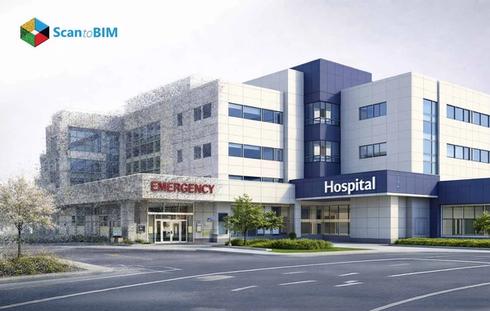
Digital twin platforms support advanced facility operations through accurate infrastructure models and continuous operational data streams. Engineers deploy Scan to BIM for existing buildings to generate precise as-built models that support facility analytics, infrastructure monitoring, asset documentation and operational intelligence across commercial and institutional environments.
Space Utilization and Occupancy Management
Digital twins integrate occupancy sensors and building analytics platforms to generate realtime utilization maps across workspaces and operational zones. Facility managers analyze occupancy patterns, examine spatial efficiency and reorganize workspace allocation strategies using data insights derived from the continuously updated building model environment.
Asset Tracking and Lifecycle Management
Every infrastructure component within the building receives a digital representation inside the twin environment. Asset records store maintenance history, installation data, operational benchmarks and warranty information. Facility technicians access this asset intelligence through connected digital interfaces during inspections, servicing activities and lifecycle management planning.
Safety and Emergency Preparedness
Digital twin environments support safety analysis through simulation of evacuation scenarios, emergency access routes, and fire spread modeling. Facility teams evaluate risk response strategies through virtual drills that replicate real building conditions. These simulations support regulatory safety compliance and preparedness planning across complex infrastructure environments.
Infrastructure Management for Large Campuses
Large campuses including institutional, commercial, healthcare and industrial complexes manage multiple buildings through centralized digital twin environments. Operations teams monitor electrical networks, water infrastructure, telecommunications systems and transportation corridors through a unified digital interface that visualizes infrastructure performance across the entire campus.
Challenges in Implementing Digital Twin Models
Digital twin implementation introduces several technical and operational complexities across building information systems. Engineers coordinate BIM environments, IoT sensor networks, facility databases and analytics platforms within a unified digital infrastructure. Successful deployment requires structured data architecture, scalable computing environments and multidisciplinary expertise that supports stable digital twin operations across large building ecosystems.
1. Data Interoperability
Digital twin platforms connect BIM models, IoT devices, GIS datasets and facility management systems into a shared data environment. Each system operates through different data schemas and exchange protocols. Engineering teams implement interoperability frameworks such as IFC, COBie and gbXML that support structured data exchange and coordinated information flow across digital twin infrastructure.
2. Large File Management
Reality capture campaigns generate high-density point cloud datasets that frequently reach 50 to 200 gigabytes for complex facilities. Detailed digital models add additional layers representing architectural, structural, and MEP systems. Organizations implement cloud storage infrastructure, distributed processing frameworks, and progressive visualization technologies that support efficient management of extensive spatial datasets.
3. Expertise Requirements
Digital twin implementation demands multidisciplinary expertise across 3D modeling, IoT integration, cloud platform administration and engineering analytics. Engineering teams combine architectural knowledge, construction technology expertise, and information systems capabilities. Professional training programs and specialized consulting partners support organizations that develop internal competency for digital twin deployment.
4. Cybersecurity Imperatives
Digital twin environments operate through continuous communication between IoT sensors, building management platforms, and cloud analytics systems. Security frameworks include encrypted communication channels, role access management, intrusion detection platforms, and continuous network monitoring. These protective mechanisms safeguard operational data streams and infrastructure intelligence within digital twin ecosystems.
5. Scanning Condition Constraints
Reality capture operations encounter technical challenges across reflective materials, complex geometries and physically restricted spaces. Survey teams deploy hybrid capture strategies that combine terrestrial laser scanning, UAV LiDAR, photogrammetry and targeted manual measurements. This coordinated methodology produces complete spatial datasets that support accurate BIM reconstruction and digital twin modeling.
Future of Digital Twins in Smart Cities and Infrastructure
Buildings account for approximately 40% of global energy consumption, making them among the highest-priority targets for digital twin-driven efficiency programs. Urban digital infrastructure is moving toward continuously updated city scale simulation environments that integrate building twins with transportation networks, energy grids, and environmental monitoring systems. Engineers apply BIM for digital twin development to connect building information models with IoT sensor arrays, edge computing nodes, and urban analytics platforms. High-frequency data streams from HVAC systems, smart meters, structural health sensors, and occupancy analytics feed urban data platforms that evaluate energy demand, thermal comfort performance, carbon emission patterns, and infrastructure load distribution across metropolitan environments.
The technology underpinning these environments continues to develop across four interconnected dimensions:
- AI-Driven Point Cloud Classification: AI now automates the conversion of raw scan data into structured BIM components, accelerating delivery timelines and freeing modeling teams to focus on complex facility detailing.
- Autonomous Drone LiDAR Updates: Drone LiDAR fleets execute scheduled recurring flights that detect geometric changes across buildings and infrastructure corridors, pushing updates directly into live digital twin environments on a continuous basis.
- BIM as a Continuously Maintained Asset: Engineering teams increasingly treat BIM models as live operational assets managed across the entire building lifecycle rather than fixed project deliverables.
- Self-Learning Digital Twin Platforms: Newer platforms use accumulated historical sensor data to refine their own predictive models over time, delivering progressively sharper maintenance forecasts and energy optimization outcomes.
Advanced reality capture programs conducted by a specialized scan to BIM service provider supply updated spatial datasets for infrastructure twins. Autonomous drone LiDAR missions capture geometric changes across rooftops, facades, bridges, and transport corridors. AI modeling engines convert point cloud datasets into updated BIM components that refresh operational digital twins. Urban operations centers analyze synchronized models to evaluate infrastructure stress conditions, predict maintenance requirements across distributed assets, and coordinate multi-system performance across transportation, energy, and building networks.
Conclusion
Engineers use reality capture and BIM modeling to build reliable digital twins for smart buildings. Laser scanning captures accurate existing conditions, and modeling specialists convert point cloud data into structured building models with defined development levels. These models connect with IoT sensors, building management systems and analytics platforms. As a result facility teams monitor performance, analyze system behavior, plan maintenance strategies and make informed decisions that improve operational efficiency across the building lifecycle.