




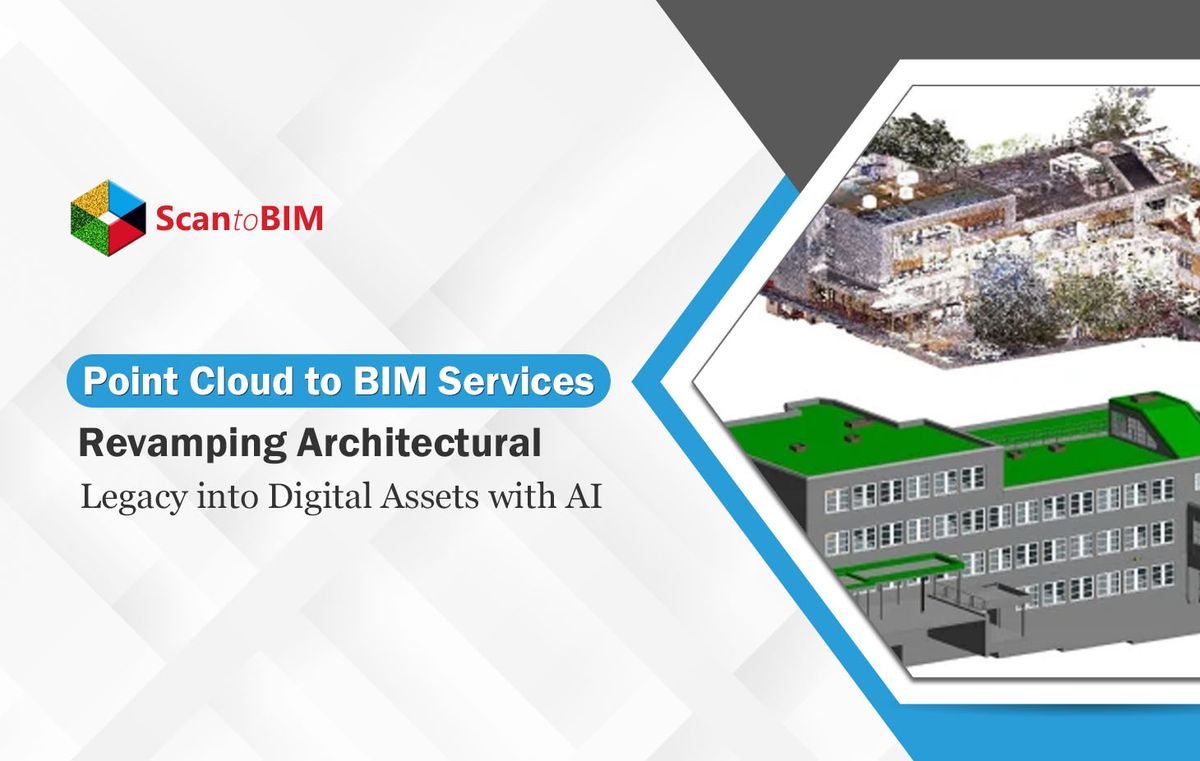
The architecture, engineering, and construction sector is spearheading various technological advancements to preserve and restore the architectural legacy, transforming historical built forms into digital assets and supporting the ongoing maintenance of large-scale infrastructure. We efficiently convert architectural heritage into digital assets by capturing real-world site conditions and developing highly accurate 3D models.
In this article, we will explore how Point cloud to BIM services, augmented by AI, are revamping the architectural legacy and aiding restoration projects.
What is Point Cloud to BIM?
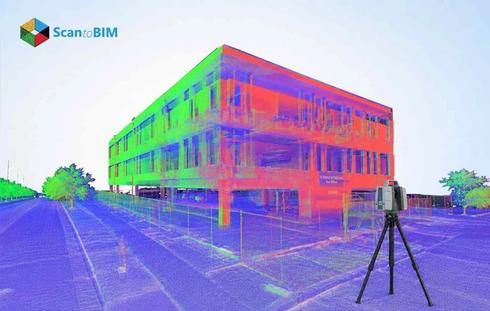
Point cloud to BIM is the process of extracting a building's physical or geometric attributes using laser scanning devices and then converting that data into a 3D digital BIM model.
Laser scanning collects millions of points to create a point cloud that accurately represents a building's surfaces in three-dimensional space.
This point cloud data is used to develop what is described as a ‘twin’ of the structure, including its architectural features. It forms a strong foundation for redeveloping or renovating heritage structures, as it captures accurate digital information about the state of the building, which is not readily available. Point cloud to BIM conversion services capture every detail of the built form, regardless of its strong or decaying state.

Why is Point Cloud to BIM Conversion Services beneficial for heritage-related projects?
The significance of Point Cloud to BIM conversion services for heritage structures is primarily related to the precision of the collected data and the time-saving feature of the process. Historical buildings or those constructed several decades ago have limited or incorrect drawing sets, leading to difficulties in redesign and renovation.
Structural changes may impair the building’s form, and the aging process and earlier attempts at restoration may hide some of the changes. Conventional approaches to quantifying and documenting such structures are cumbersome and susceptible to error.
Essential drawbacks of these problems are solved by Scan to BIM services that offer an accurate digital copy of the building. For heritage buildings, having an accurate digital model is crucial for several reasons:
- As-built documentation: It is necessary to maintain the state of the building structure as documented at a specific period in time.
- Restoration planning: Through the BIM model, architects and engineers can identify concerns in the structural and aesthetic aspects of the building.
- Archival records: With digital assets, one has an etched record that does not fade away or disintegrate as the physical structure of the building would.
Decoding Benefits of Scan to BIM Services in Transforming Architectural Legacy
Scan to BIM services are revolutionizing construction with elaborative analysis of legacy and heritage structures. The conventional methods of documentation and restoration were often tedious, demanding physical effort, and erroneous. The transition towards digitization offers various benefits for restoration and redevelopment projects, a few of which are:
Appropriate Paperwork for Archiving
Scan to BIM services provide an accurate representation of the building commissioned for restoration. The existing heritage buildings have undergone multiple changes, alterations, refurbishments, and, most importantly, multiple repairs throughout their centuries-long existence.
Any amendments to the heritage structure should be documented accurately to provide a factual database for facility management. By integrating point cloud scanning services and converting the latter into a BIM model, every intangible factor, including ornaments and major building elements, can be restored to its pristine state.
Aids for Restoration and Renovation
One of the main difficulties of working with historic built forms is to construct and restore without damaging the historical significance of any edifice. Thus, with the Scan to BIM services, the AEC professionals commissioned for restoration can use the BIM model to plan design interventions with extreme accuracy and precision.
For instance, if some part of the heritage structure is damaged and requires restoration, the architect can refer to the BIM model and align the concept of the new design with the existing design.
Improving Intersectoral Collaboration and Communication
For the heritage preservation project, the team is supposed to collaborate with various architects, engineers, historians, and the government for approvals and seamless execution.
Efficient collaboration will facilitate better project conceptualization, design, and execution. The disparity in dimensioning and allocation of spaces between the physical plan and the blueprint might lead to confusion among the team members.
Streamlining Design and Execution with Effective Project Management
Point cloud to BIM services provide architectural and engineering teams with the latest and most accurate data about the existing heritage, facilitating streamlined facility management.
A synchronized database enables the project team to deal with any existing structural issues and take proactive measures to ensure security in the future.
Synchronizing Renovation for Professionals with Efficient Workflows
The cloud-based working and Scan to BIM services enable collaboration among project stakeholders and synchronize workflows, leading to more efficient work. This allows everyone involved in the construction project, including architects, engineers, and contractors, to work from the same model, increasing coordination and reducing susceptibility to error and misunderstandings.
For heritage projects, precision infused with compliance with historic conditions is critical for developing an accurate iteration of the specific building.
AI-powered Scan to BIM Services: Modernizing Heritage with Technology
Using AI in Scan to BIM services to transform architectural legacy into digital assets offers several advantages that enhance the preservation, restoration, and analysis of these culturally significant buildings. Here are some of the key benefits:
Automated Workflow to Increase Effectiveness
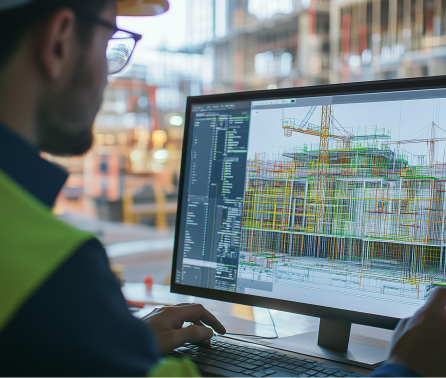
Traditional Scan to BIM services involve heavy-handed conversion of point cloud data into the corresponding usable BIM models. The integration of AI into Scan to BIM is drastically transforming the surveying and restoration process. AI algorithms can easily recognize and detail features like walls, columns, and windows, saving time and reducing manual effort.
The architectural teams can utilize the saved time to undertake research and planning of the restoration instead of investing it in the data input process manually.
For large-scale projects, AI-powered Scan to BIM services can easily capture site data that otherwise requires days and weeks through the conventional process.
Enhanced Precision with AI Algorithms
Architectural Scan to BIM services enhance the quality of the final model with advanced AI algorithms. AI tools identify any existing defects in the collected point cloud data or any missing details while generating the BIM model.
Such accuracy and precision are paramount when dealing with heritage structures where the slightest error might do a lot of harm to the true nature of the conservation work.
AI-based automated systems can recognize the signs of degradation or structural flaws in the data set, which are not easily noticeable by human analysts.
Detection of such issues enables more precise and timely interventions when using Scan to BIM solutions supported by artificial intelligence.
Future Prospects of Point Cloud to BIM Services with AI
With the integration of Artificial Intelligence (AI), the future of Point Cloud to BIM services promises revolutionary transformations, enabling faster processing, higher accuracy, and more intelligent automation.
Big Data and AI for Predictive Maintenance
The integration of Big data with AI is transforming how industries manage assets, infrastructure, and equipment. Predictive maintenance is a proactive approach that uses real-time data from sensors, machines, and systems to predict when equipment or systems will fail.
By analyzing this data, AI models can forecast potential issues, allowing companies to address them before they result in costly downtime or severe damage.
Virtual Reality (VR) and Augmented Reality (AR) with AI for Immersive Experience
AR and VR are rapidly evolving technologies that offer immersive experiences by blending real and virtual environments. When combined with Artificial Intelligence (AI), VR and AR become even more powerful, enabling more dynamic, interactive, and personalized experiences.
AI in VR and AR elevates these technologies by making them more intelligent, adaptive, and interactive. This level of 3D visualization allows seamless planning and execution of large-scale restoration projects, developing a clear picture of the building environment.
AI-Powered Point Cloud to BIM Modelling Services: Integrating Excellence
Advanced AI tools by ScantoBIM.Online provides the fastest Scan to BIM conversion, delivering unmatched quality and speed. AEC firms can convert architectural scan into BIM models in just 1 day using the AI tool while minimizing human intervention, ideal for architectural projects and facilities management.
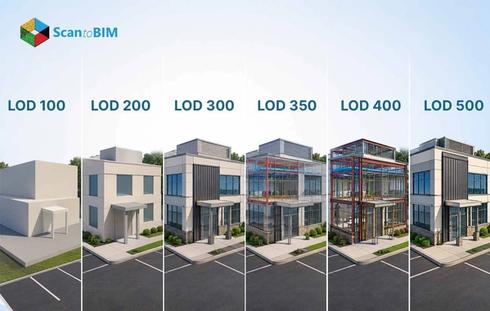
ScantoBIM.Online has a team of 100+ architects and engineers who specialize in point cloud to BIM modelling services and provide 3D models with LOD 200, 300, 350, and beyond, ensuring precise representation of existing structures.
Key Benefits
- Advanced AI tools and plugins generate precise and efficient results.
- Affordable Scan to BIM solutions at just $10/hour.
- Faster turnaround time with 10,000 sq ft of Scan to BIM conversion in just 1 day.
- Best quality control tool that checks 100+ parameters in models.
- Get consistent, quality-driven, and industry-standard BIM models.
- Thorough discussions regarding project scope and timelines, addressing any potential barriers promptly.
- Dedicated architects and engineers trained specifically for US-based projects, ensuring availability during US time
Success Story of AI-Powered Point Cloud to BIM Services by ScantoBIM.Online
A California-based company partnered with ScantoBIM.Online for Scan to BIM conversion services. With our advanced and efficient AI tools, the client received 500,000 sq ft of Scan to BIM conversion with an average of 11,000 sq ft of conversion daily.
The client received unparalleled accuracy and quality, which generated top-tier results. The services not only offer faster turnaround times but also stay within budget constraints.
Conclusion
Using Scan to BIM services is a revolution in architectural conservation and restoration projects. The use of AI in the Scan to BIM process increases accuracy, efficiency, and the capacity to analyze the degradation of the structure in the future.
As the AEC industry effectively adopts these new-age digital technologies, saving heritage structures will gradually become more anticipatory and accurate, thus keeping more remnants of the structures for future use and appreciation.
By leveraging AI, heritage conservation efforts can become more sustainable, precise, and effective in preserving the cultural and historical value of architectural treasures.